(Note to self: I am proceeding with the assumption that I should generate generic placeholder slugs for the Cluster Links to fulfill the "at least 3-5 Cluster links" requirement, as none were provided in the prompt but the instruction to include them was strict. I will use: character-design-fundamentals, visual-storytelling-animation, prop-design-principles, color-theory-for-artists, and fantasy-worldbuilding-tips.)
The Art & Design of Cartoon Swords: Visualizing Iconic Fantasy Blades
Ever stopped to truly appreciate the humble (or not-so-humble) cartoon sword? You know the ones – Cloud Strife’s impossibly massive Buster Sword, He-Man's Power Sword glowing with cosmic energy, or Link's Master Sword, a beacon of heroism. These aren't just mere props; they're extensions of character, pivotal plot devices, and instantly recognizable symbols that define entire fictional worlds. Mastering the nuances of The Art & Design of Cartoon Swords is about far more than just drawing a blade; it's about infusing steel with story, personality, and an undeniable sense of magic.
As a seasoned observer of visual storytelling, I can tell you that a truly great cartoon sword doesn't just cut; it communicates. It hints at a character's strength, their moral compass, their comedic timing, or their tragic backstory. Ready to unsheathe some serious insights? Let’s dive into what makes these animated armaments truly iconic.
At a glance: Your essential takeaways on cartoon sword design
- Personality First: Every sword needs a distinct character that aligns with its wielder and world.
- Silhouette is King: A recognizable outline is crucial for instant identification, even at a distance.
- Exaggerate Wisely: Push proportions, but always with purpose – for power, humor, or specific abilities.
- Visual Shorthand: Use color, texture, and effects to quickly convey material, magic, and history.
- Storytelling Tool: The sword should serve the narrative, reflecting lore, conflict, or character development.
- Iterate and Refine: Great designs aren't born perfect; they evolve through sketches and feedback.
Beyond the Blade: Why Cartoon Swords Matter
Think about it: when you picture your favorite animated hero or villain, their signature weapon often springs to mind right alongside them. It's a testament to the incredible power of thoughtful prop design. These aren't just background elements; they are active participants in the visual dialogue, enriching the narrative and deepening our connection to the characters.
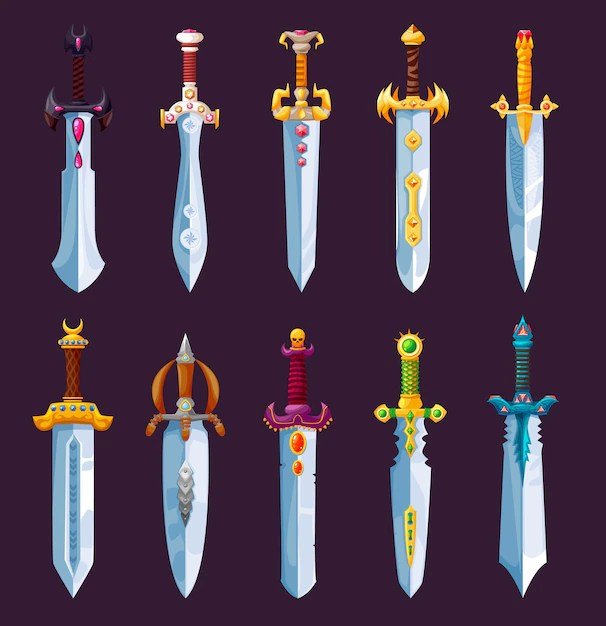
A cartoon sword can be a comedic oversized butter knife, a gleaming relic passed down through generations, or a terrifying, jagged monstrosity that screams danger. Each design choice, from the curve of the guard to the gleam of the pommel, contributes to the overall storytelling. It’s a specialized form of design that balances fantasy with a surprising degree of practical consideration, even if those "practicalities" bend the laws of physics.
The Anatomy of Imagination: Core Principles of Cartoon Sword Design
Designing a compelling cartoon sword is a delicate dance between artistic freedom and intentional communication. You're not aiming for historical accuracy (unless that's your specific cartoon's gag), but rather for evocative power.
Exaggeration is Your Ally: Shape and Scale
The beauty of cartooning lies in its freedom from reality. You can stretch, squash, and distort elements to emphasize characteristics. With swords, this means you can make a blade impossibly long to convey its reach, incredibly wide to suggest brute force, or whimsically thin for speed and elegance.
Consider the Buster Sword from Final Fantasy VII: it’s ludicrously huge, far too large for any human to realistically wield. But that exaggeration isn't arbitrary. It immediately tells you something about Cloud Strife – his immense strength, his burdened past, and the sheer scale of the challenges he faces. It’s a visual metaphor made manifest. When you’re sketching, don't be afraid to push proportions to see what feels right for the story you're trying to tell.
Personality in Steel (or Pixels): Defining Character Through Design
Every sword should have a "personality" that resonates with its wielder. A heroic sword might have clean lines, a sturdy guard, and a comforting gleam. A villain's weapon, conversely, could be jagged, asymmetrical, and perhaps even emit a sickly aura.
- Heroic Blades: Often balanced, symmetrical, and inspiring. They might feature motifs of courage, justice, or ancient lineage. Think of the clean, noble lines of Lion-O’s Sword of Omens or King Arthur's iconic Excalibur, often depicted with elegant curves and jewel-encrusted hilts.
- Villainous Edges: These tend to be aggressive, intimidating, and often asymmetrical. Sharp angles, dark colors, and monstrous features can make a weapon feel menacing. Sauron’s imposing mace from Lord of the Rings (even in animated forms) is a masterclass in this, designed to crush rather than cut, reflecting his brutal power.
- Comedic Cutters: Here, exaggeration goes for laughs. A sword might be absurdly small, excessively large, bendy like rubber, or equipped with ridiculous gadgets. Think of cartoon characters pulling out a sword far too big for them from a tiny sheath – the absurdity is the point.
The choices you make about the blade's shape, the hilt's design, and even the pommel's ornamentation should all reinforce who is holding it and what their role is in the story. This is a core part of character design fundamentals—how supporting elements build the overall persona.
The Illusion of Material: Visual Shorthand for Substance
Even without photorealistic textures, cartoon swords need to convey what they’re made of. Is it heavy steel, lightweight magic, ancient bone, or futuristic energy? Artists use visual shorthand to communicate these qualities.
- Shine and Reflection: A bright, crisp highlight suggests polished metal. A duller, broader highlight might imply worn or unpolished steel.
- Texture Lines: Subtle cross-hatching or brushed strokes can give the impression of hammered metal or a worn surface.
- Color Palette: Blues and silvers for steel, greens and purples for magical energy, browns and muted tones for ancient, earthen materials.
- Outline Weight: A thicker, bolder outline can suggest a heavier, more substantial weapon, while a thinner line implies lightness or speed.
A sword that glows, for instance, immediately tells you it's magical or technologically advanced, even if you don't know the specifics. This visual information is processed instantly by the viewer, enriching their understanding of the world.
Color, Light, and Aura: More Than Just a Hilt
Beyond basic material, color and light effects elevate a cartoon sword from a simple prop to a vibrant, dynamic element. Color isn't just aesthetic; it carries meaning.
- Emotional Resonance: Red can signify aggression or passion; blue, calm or arcane power; green, nature or poison. The choice of hue for a magical aura or blade glow dramatically impacts its perceived effect.
- Auras and Effects: A subtle glow around a blade implies enchantment. Trails of light suggest speed or residual energy. Cracks emitting light could mean unstable power. These visual cues are critical for communicating abilities without dialogue.
- Wear and Tear: Nicks, scratches, and a dulled edge can tell a story of countless battles fought, adding history and authenticity to the weapon. A pristine blade might belong to a new hero, while a scarred one speaks of a veteran.
Understanding how colors interact and influence perception is key here, making color theory for artists a vital skill for prop designers. The strategic use of highlights, shadows, and secondary colors on a sword's hilt or blade can create a sense of depth and form that belies the two-dimensional nature of animation.
Crafting an Icon: Practical Steps in Designing Your Cartoon Sword
Designing a memorable cartoon sword isn't just about waiting for inspiration to strike; it's a process. Breaking it down helps ensure your final design is both captivating and functional within its fictional context.
Step 1: The Narrative Brief – What's Your Sword's Story?
Before you even pick up a pencil, ask yourself:
- Who wields this sword? What are their key traits, strengths, and weaknesses?
- What is its purpose? Is it for cutting, bashing, spellcasting, or a symbolic role?
- What's its origin story? Was it forged by a legendary smith, discovered in a ruin, or magically created?
- What kind of world does it exist in? Is it high fantasy, sci-fi, steampunk, or a comedic parody?
- Does it have special powers? If so, how can those powers be visually represented?
A detailed brief guides your creative choices. A sword for a clumsy knight might look robust but slightly impractical, while a blade for a stealthy rogue would be sleek and minimal. This initial brainstorming is fundamental to visual storytelling in animation, ensuring your prop serves the broader narrative.
Step 2: Silhouette First – The Power of Outline
When you design, start with the most basic shape: the silhouette. A strong silhouette makes a sword instantly recognizable, even as a shadow. Think about how easy it is to identify the Master Sword or a Lightsaber from just their outlines.
Sketch numerous silhouettes without adding internal details. Focus on:
- Distinctiveness: Does it stand out from other swords?
- Clarity: Is its form easy to read?
- Proportion: Does it visually convey its intended weight, length, and balance?
Once you have a silhouette that feels compelling, you can begin to refine it and add internal details. This approach ensures your sword has a solid foundation for memorability.
Step 3: Detail & Texture – Adding Depth Without Clutter
With your silhouette established, it’s time to add the smaller elements that give the sword character. But beware of over-detailing; too much clutter can make a cartoon sword look busy and less iconic.
- Hilt Design: This is often where a sword's character truly shines. Elaborate crossguards, ornate pommels, or unique grip textures can instantly convey lore or wielder status.
- Blade Markings: Runes, engravings, cracks, or unique patterns on the blade itself can hint at its magical properties, age, or past battles.
- Material Indication: As discussed, subtle visual cues for metal grain, wood texture, or glowing energy.
Each detail should serve a purpose, either aesthetically or narratively. A single, well-placed gem on a pommel can be more impactful than a dozen haphazardly scattered elements.
Step 4: Ergonomics (Cartoon Style) – Does it "Feel" Right?
Even in a cartoon, a sword needs to look like it could be wielded, at least within the logic of its own world. This doesn't mean perfect realism, but rather a visual sense of balance and grip.
- Handle Size: Is the grip proportionate to the wielder's hand (or paw, or claw)?
- Balance Point: While you can’t physically feel it, the visual weight distribution should suggest if it’s top-heavy, balanced, or light. A heavy blade often has a thick, sturdy hilt.
- Clear Grip Area: Make it obvious where the wielder would hold the sword.
- Exaggerated Features with Purpose: A massive handguard might protect a character who relies on blocking; a tiny hilt might signify a magical weapon that floats rather than being gripped.
Understanding these fundamentals is part of good prop design principles, even when you're bending the rules for artistic effect. A sword that looks impossible to hold or use can break immersion, even in the most fantastical settings.
Step 5: Iteration & Refinement – Don't Settle for "Good Enough"
The first idea is rarely the best. Great designs come from a process of sketching, reviewing, and refining.
- Sketch Variations: Create multiple versions of your sword, experimenting with different hilt styles, blade shapes, and sizes.
- Contextualize: Draw the sword being held by its character, in action. Does it look right? Does it feel powerful, clumsy, elegant?
- Gather Feedback: Share your designs with peers or mentors. Fresh eyes can spot issues or suggest improvements you might have missed.
- Test in Motion (if applicable): If designing for animation, consider how the sword will move. Will its exaggerated features cause problems for animators, or will they enhance the motion?
This iterative process ensures that your final sword design is not only visually appealing but also effectively serves its role in the story and aligns with the overall artistic style of your project.
Beyond the Blade: Specific Design Archetypes & Their Lessons
Looking at established examples can provide immense insight into what works and why. These archetypes aren't rigid rules but useful frameworks.
The Hero's Blade: Noble and Purposeful
Often, the hero's sword is a symbol of hope, justice, or a sacred duty. Its design reflects these virtues.
- Clean lines: Less clutter, more focus on essential form.
- Balanced appearance: Suggests fairness and control.
- Subtle embellishments: Perhaps a crest, a symbol of their kingdom, or a single meaningful gem.
- Iconic examples: Link's Master Sword (clean, elegant, a clear symbol of good), He-Man's Power Sword (powerful, geometric, an obvious conduit of immense energy). These blades are immediately recognizable and align perfectly with their noble wielders.
The Villain's Edge: Menacing and Threatening
A villain's sword is designed to instill fear and convey their power, often in contrast to the hero's.
- Jagged, asymmetrical forms: Creates a sense of danger and imbalance.
- Darker color palettes: Black, deep reds, sickly greens, often paired with glowing accents.
- Sharp, aggressive points and hooks: Implies cruelty or destructive intent.
- Iconic examples: Skeletor's Havoc Staff (not a sword, but an excellent example of villainous, skull-motif design), Sephiroth's Masamune (impossibly long, slender, and intimidating, representing his cold precision).
The Comedic Cutter: Absurd and Unpredictable
Humor in cartoon sword design often comes from subverting expectations or exaggerating to the extreme.
- Disproportionate size: Tiny blades with huge hilts, or massive blades wielded by small characters.
- Unusual materials: Rubber, jello, or comically blunt edges.
- Unexpected functions: A sword that doubles as a backscratcher, a sandwich cutter, or a broom.
- Iconic examples: Many a Looney Tunes or Tom & Jerry gag, where household items become ludicrously ineffective "swords" or a flimsy toy sword inexplicably cuts through steel.
The Magical Implement: Ethereal and Potent
These blades are less about physical cutting and more about channeling arcane forces.
- Glowing effects: A constant or pulsing aura, sometimes with color shifts.
- Translucent or ethereal materials: Blades made of light, crystal, or pure energy.
- Runes and glyphs: Intricate markings that suggest ancient spells or mystical power sources.
- Iconic examples: The Lightsaber from Star Wars (pure energy blade, iconic hum, specific colors for specific alignments), many elemental swords in fantasy animation that crackle with fire or electricity.
Common Pitfalls to Avoid in Cartoon Sword Design
While creative freedom is vast, certain missteps can weaken your design and impact its effectiveness.
- Genericism: The biggest sin. A sword that looks like "any other sword" fails to contribute to the unique identity of your character or world. Strive for something distinctive.
- Lack of Storytelling: If a sword doesn't tell you anything about its wielder, its history, or its purpose, it's just a shape. Every curve, color, and embellishment should have a reason.
- Inconsistent Style: Designing a hyper-realistic sword for a super-deformed, cutesy cartoon will create a jarring visual dissonance. Ensure your sword's style matches the overall aesthetic of your project.
- Over-Detailing: Too many tiny runes, too many unnecessary spikes, or overly complex patterns can make a sword look messy and hard to read, especially in motion or at small scales. Simplicity often breeds iconic status.
- Ignoring the Wielder: A sword designed for a hulking brute won't suit a nimble elf, and vice-versa. Always consider who is holding the sword and how it interacts with their physical form and fighting style.
For more generalized tips on avoiding common design mistakes across various props and elements, be sure to check out Our guide to cartoon swords for comprehensive advice.
Evolving Trends: The Future of Fantasy Blades
The landscape of cartoon sword design is always shifting, driven by technological advancements and evolving storytelling techniques.
- Digital Sculpting & 3D Printing: Artists now have incredible tools like ZBrush or Blender to sculpt highly detailed, complex sword designs that can then be seamlessly integrated into 3D animation or even 3D printed for physical prototypes. This allows for intricate geometries previously impossible in 2D.
- Fusion Genres: As fantasy and sci-fi continue to blend, so too do their weapon designs. We're seeing more "tech-fantasy" swords that combine glowing energy blades with intricate mechanical parts, or ancient magical relics infused with cybernetic enhancements.
- Interactive Design: In video games, sword design often has to consider player customization. This means creating modular designs where hilts, blades, and pommels can be swapped, or where swords evolve visually as the character levels up or gains new powers.
- Emphasis on VFX: Modern animation allows for incredibly dynamic visual effects. Swords aren't just solid objects; they often shimmer, vibrate, pulse with energy, or leave spectacular trails, enhancing their magical or technological properties.
These trends highlight a continuing push for greater visual fidelity and integration of a sword's design with its in-world function and visual effects, making the process of fantasy worldbuilding tips even more critical for designers.
Your Questions Answered: FAQs on Cartoon Sword Design
Here are some common queries aspiring designers have about crafting captivating cartoon blades.
Q: How do I make my cartoon sword truly unique and not just a generic "sword"?
A: Focus on its story. Ask: What makes this sword special? Is it an heirloom, a cursed artifact, a magical tool, or something else? Incorporate elements from its lore into the design – perhaps a family crest, a visible magical power source, battle scars, or an unusual material. Start with a distinctive silhouette and let narrative details inform the embellishments.
Q: Should I worry about physics or realism when designing a cartoon sword?
A: Not in the traditional sense. Cartoons operate on their own internal logic. The "physics" you need to worry about are the visual physics that maintain consistency within your cartoon's style. If a character can swing a 500-pound sword, design it to look like a 500-pound sword through exaggerated mass and visual strain on the wielder, even if it defies real-world physics. Focus on believability within your chosen art style.
Q: What role does cultural influence play in sword design, even in fantasy settings?
A: A huge role! Even fantastical designs often draw inspiration from real-world historical weapons or cultural motifs. A katana-inspired sword suggests agility and precision; a broadsword, strength. Incorporating patterns, symbols, or architectural cues from fictional cultures within your world can greatly enrich a sword's design and make it feel more authentic to its setting. Researching historical weapon designs can provide an endless wellspring of inspiration, even if you ultimately exaggerate and stylize them.
Q: How important is the sword's color palette?
A: Extremely important. Color influences mood, identifies magical properties, and visually links the sword to its wielder or faction. A sword with a warm, fiery glow suggests power or destruction, while one with cool, ethereal blues might indicate healing or ice magic. Ensure the colors chosen enhance the sword's personality and communicate its function effectively.
Forging Your Own Legacy: Taking the Next Steps
You've now got a solid foundation for understanding the intricate art and thoughtful design that goes into creating memorable cartoon swords. It's a field where creativity meets meticulous planning, where every line and curve serves a purpose.
So, what's next?
- Practice: Grab your sketchbook (or digital tablet) and start drawing. Redesign iconic swords, or invent entirely new ones based on the principles discussed.
- Observe: Pay closer attention to the swords you see in your favorite cartoons, anime, and video games. Analyze why they look the way they do and what they communicate.
- Build Your Toolkit: Experiment with different art styles, digital brushes, and rendering techniques to find what best helps you visualize your designs.
- Seek Feedback: Don't be afraid to share your creations and get constructive criticism. It's how every great artist grows.
The world of animated blades is rich with possibility. By applying these insights, you're not just drawing swords; you're crafting legendary artifacts that can capture imaginations and endure in the hearts of audiences for generations. Go forth, and forge something truly iconic!